Saturday, February 18, 2023

Tree Planting Project at the Luciphy East Bird Sanctuary (2022)

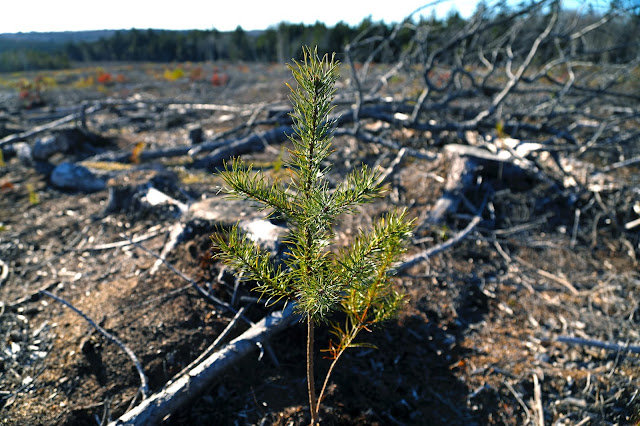
Here's a post to share some info about another one of our bird sanctuary projects.  Replant.ca Environmental did the tree planting work on this site in southeastern New Brunswick in September 2022.  The work was done at a site on the Luciphy Road.  The site is being turned into a bird sanctuary.  We call this the Luciphy East site because we also have a carbon sequestration project on Luciphy Road, just a bit further to the west.  All funding and support for this project was provided by One Tree Planted, which is an amazing organization that fundraises and supports the planting of trees on a global scale.


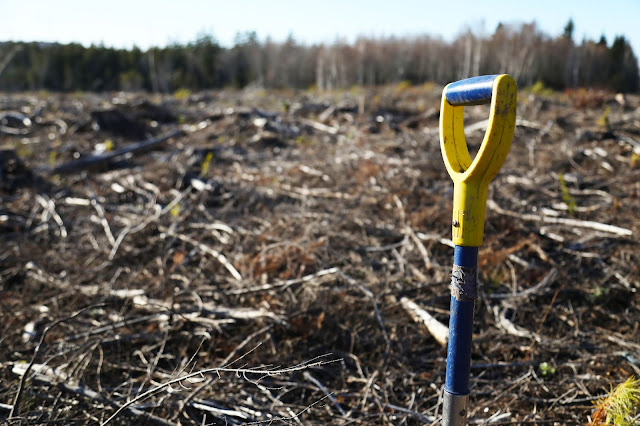
This site was formerly owned privately by a third party, and that landowner harvested the wood recently.  We were able to acquire the property after it was harvested, then designed a plan to turn it into a nature reserve (we will never allow it to be harvested again).  Based on the site characteristics, we decided that this particular property should be part of our group of bird sanctuary sites.


The GPS coordinates at the front of this site are:  45.97729, -64.22022


The primary purpose of this project was to create and support biodiversity and wildlife habitat.  A secondary purpose was to support climate stability through carbon sequestration.

This particular site was a prime opportunity to create another bird sanctuary, as it met all four of our main criteria for site selection:  (1) Excellent access to the edge of the property on public roads; (2) Not a complete clear-cut, so there is existing mature nesting habitat; (3) Suitable "moderate" size of between 10 and 50 acres (this particular site is approximately 39.0 acres); and (4) contains flowing water, which will attract and support a broader diversity of species.

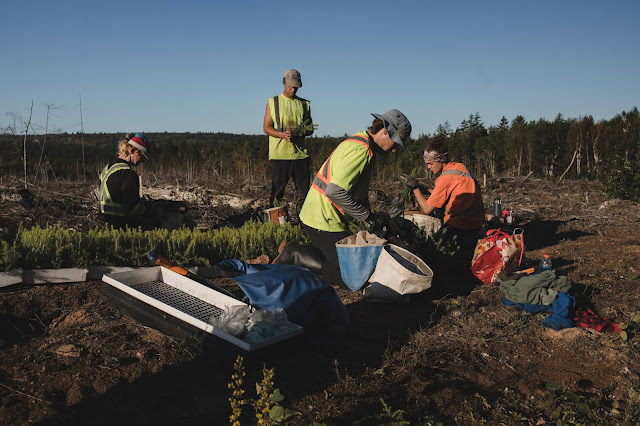
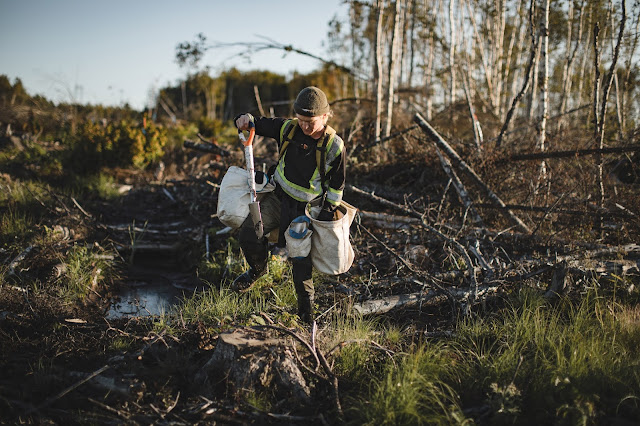
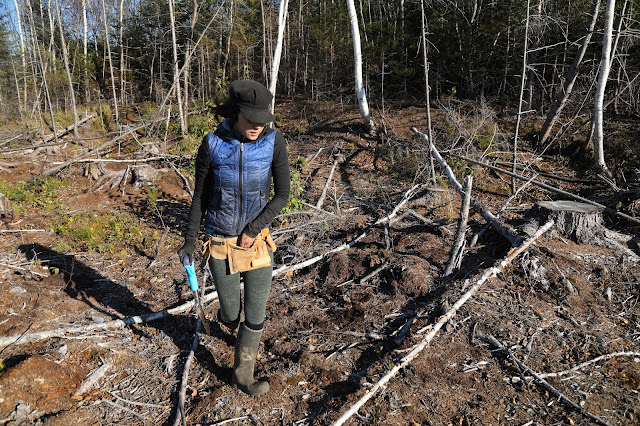
In total, our team planted 24,558 trees on this site, with the majority consisting of a mix of red spruce, eastern white pine, and white pine.  Although the site already shows some evidence of natural regeneration of white birch, red maple, yellow birch, and other hardwoods, we plan to enhance the mix of deciduous species on this site in the near future, as availability permits.  Diverse forests are healthy forests.

Here are a few more photos taken during the planting of this project, which took place on three different dates during September of 2022:


We look forward to watching this site grow over the next several years, and will eventually open it up for public access.

Again, many thanks to the wonderful team at One Tree Planted - without their funding and support, this project never would have happened!

You can see several dozen additional photos of our work on this planting site by visiting our public 2022 Planting Photos folder on Dropbox (go into the "Luciphy East" sub-folder).


Thanks for reading!

- Jonathan Clark


Replant.ca Environmental is a Canadian company that plants trees for carbon capture and builds community forests.  We also plant trees in national, provincial, and municipal public parks to mitigate damage from wildfires, storms, insects, and forest diseases.  We operate thanks to numerous small contributions from the general public, in addition to larger project sponsorships from businesses and corporations around the world.  If you'd like to learn how to show your support, visit our donations page.  Even if you aren't able to make a contribution, we very much appreciate when people are able to share our posts or our website link on social media, to help spread the word about the work that we're doing!

To learn more about the various species that we plant, visit the conifers page or the deciduous (hardwoods) page on our website.  Thanks so much for your interest!

Incidentally, our organization is often seeking additional land for our carbon capture projects.  Please visit this link if you might know of a recently-harvested property that we could rebuild into a permanent legacy forest.


Tree Planting Project at Fort Folly First Nation (2022)

In September of 2022,  Replant.ca Environmental connected with the Mi'kmaq First Nation at Fort Folly. The Nation is located near Dorchester in Westmorland County, New Brunswick.  This area, as well as the rest of what is now referred to as the Maritime provinces and parts of the Gaspé peninsula, are part of the Peace and Friendship region of Turtle Island. It was an honour and privilege to support reforestation on this land.  It allowed us the opportunity to appreciate the unique role and relationship that Indigenous people have with the land, both historically and in the present time.


Fort Folly First Nation is one of nine Mi'kmaq First Nations (and it is one of fifteen First Nations in New Brunswick).  Sackville, the central base of operations for Replant.ca Environmental, is also located very close to Fort Folly First Nation.


Fort Folly First Nation (FFFN) has an old decommissioned transmission corridor running through the Nation.  NB Power does not use this line anymore, and the transmission towers have been removed.  The Nation is hoping to return this strip of land to a mature forest ecosystem.  There is some natural regeneration occurring along the corridor now that the utility has stopped doing vegetation encroachment prevention, but we added several thousand seedlings to help accelerate the process of becoming a full forest again.

The Nation also has a beautiful circular 3km Medicine Trail.  We were privileged to walk the entirety of the trail, and to enjoy the time to reflect and meditate on the natural environment surrounding us.  Some of the forest adjoining the trail is patchy and we were invited to augment those areas too.  So we ended up adding some trees around various parts of the Medicine Trail, and we will be finishing that work in the Fall of 2023.

Here are a few photos of our work at Fort Folly:


In total, we planted 6,319 seedlings.  Again, we want to thank the Nation for allowing us to help contribute to the land.  You can learn more about Fort Folly First Nation by visiting this link:

https://fortfolly.ca/about-us


You can see several dozen additional photos of our work on this planting site by visiting our public 2022 Planting Photos folder on Dropbox (go into the "Fort Folly First Nation" sub-folder).


Thanks for reading!

- Jonathan Clark


Replant.ca Environmental is a Canadian company that plants trees for carbon capture and builds community forests.  We also plant trees in national, provincial, and municipal public parks to mitigate damage from wildfires, storms, insects, and forest diseases.  We operate thanks to numerous small contributions from the general public, in addition to larger project sponsorships from businesses and corporations around the world.  If you'd like to learn how to show your support, visit our donations page.  Even if you aren't able to make a contribution, we very much appreciate when people are able to share our posts or our website link on social media, to help spread the word about the work that we're doing!

To learn more about the various species that we plant, visit the conifers page or the deciduous (hardwoods) page on our website.  Thanks so much for your interest!

Incidentally, our organization is often seeking additional land for our carbon capture projects.  Please visit this link if you might know of a recently-harvested property that we could rebuild into a permanent legacy forest.


Tree Planting Project at the Upper Aboushagan Bird Sanctuary (2022)

Our organization did some environmental planting work in southeastern New Brunswick in September 2022.  The work was done on the Upper Aboushagan road, and the site is being turned into a bird sanctuary.  All funding and support for this project was provided by One Tree Planted, which is an amazing organization that fundraises and supports the planting of trees on a global scale.


This site was formerly owned privately by a third party, and that landowner harvested the wood recently.  We were able to acquire the property after it was harvested, then designed a plan to turn it into a permanent nature reserve (we will never allow it to be harvested again in the future).  Based on the site characteristics, we decided that this particular property should be part of our group of bird sanctuary sites.


The GPS coordinates of the front of this site are:  46.00661, -64.36474


The primary purpose of this project was to create and support biodiversity and wildlife habitat.  A secondary purpose was to support climate stability through carbon sequestration.

This particular site was a prime opportunity to create another bird sanctuary, as it met all four of our main criteria for site selection:  (1) Excellent access to the edge of the property on public roads; (2) Not a complete clear-cut, so there is existing mature nesting habitat; (3) Suitable "moderate" size of between 10 and 50 acres (this particular site is approximately 27.2 acres); and (4) contains flowing water, which will attract and support a broader diversity of species.

In total, our team planted 25,361 trees on this site, with the majority consisting of a mix of red spruce, eastern white pine, and white pine.  Although the site already shows some evidence of natural regeneration of white birch, red maple, yellow birch, and other hardwoods, we plan to enhance the mix of deciduous species on this site in the near future, as availability permits.  Diverse forests are healthy forests.

Here are a few more photos taken during the planting of this project, which took place on six different dates during August and September of 2022:


We look forward to watching this site grow over the next several years, and will eventually open it up for public access.

Again, many thanks to the wonderful team at One Tree Planted - without their funding and support, this project never would have happened!

You can see several dozen additional photos of our work on this planting site by visiting our public 2022 Planting Photos folder on Dropbox (go into the "Upper Aboushagan" sub-folder).


Thanks for reading!

- Jonathan Clark


Replant.ca Environmental is a Canadian company that plants trees for carbon capture and builds community forests.  We also plant trees in national, provincial, and municipal public parks to mitigate damage from wildfires, storms, insects, and forest diseases.  We operate thanks to numerous small contributions from the general public, in addition to larger project sponsorships from businesses and corporations around the world.  If you'd like to learn how to show your support, visit our donations page.  Even if you aren't able to make a contribution, we very much appreciate when people are able to share our posts or our website link on social media, to help spread the word about the work that we're doing!

To learn more about the various species that we plant, visit the conifers page or the deciduous (hardwoods) page on our website.  Thanks so much for your interest!

Incidentally, our organization is often seeking additional land for our carbon capture projects.  Please visit this link if you might know of a recently-harvested property that we could rebuild into a permanent legacy forest.


Volunteer Day at the Walker Road Demonstration Forest (2022)

Our team hosted a volunteer day on September 3rd, 2022.  A corporate group from Moncton participated.  This event was organized by One Tree Planted (if your corporation would like to do something similar, you should reach out to them).


The morning in question was beautiful weather.  Sunny and cool - a perfect day for planting trees.

The group of volunteers arrived between 8:00am and 8:30am.  We gathered everyone together at the main parking area, and started with a quick site safety meeting.  Immediately after that, we talked for quite a while about the site characteristics, the existing trees and plants that the volunteers would encounter, the seedlings that we would be planting, and the future plans for the site.  After that, we moved into the wooded area for a demonstration on how to plant.

Once everyone had seen a demonstration of the best techniques to plant the seedlings, we moved back to load up our buckets with trees, and to ensure that everyone had a planting shovel.  We then spread out into a large five acre area to plant the seedlings.

The majority of the trees that were planted were eastern white pine (Pinus strobus). 


The area that was planted was one that had been thinned significantly over the past few years.  The area originally contained a large number of unhealthy, rotten balsam fir.  This species tends to rot and die fairly early (40-50 years) instead of achieving true maturity, because the area is a bit too far to the southern edge of the range for that species.  We cleaned out a lot of the dead trees, and the goal was to replace them with trees that are most resilient in the face of expected future climate change.  Eastern white pine was a great species for that site, because there are very few of that type of tree on the site already, but the local ecology supports the growth of that tree.  Eastern white pine also grows to be very large at maturity, so it is an excellent choice in terms of carbon sequestration.  It is also a fairly shade tolerant tree, well-suited for growing up to augment the existing semi-mature forest cover.

Here are a few photos of the volunteers at work!


To see more photos from our various 2022 projects, visit our 2021 Planting Photos collection on Dropbox.

You can learn more about this particular planting site by visiting our Demonstration Forests page and finding the Walker Road Managed Forest.  Here's a drone overview of the site, taken in winter to better show the contrast.  The area that the volunteers covered is outlined in red.  You can see how the forest in that area is somewhat thin and in these areas, but our new trees will make it a lot healthier!


Altogether, our volunteers and Replant.ca Environmental mentoring team planted a total of three thousand trees that day.  Great work!  A big thanks to everyone who was involved.


Thanks for reading!

- Jonathan Clark


Replant.ca Environmental is a Canadian company that plants trees for carbon capture and builds community forests.  We also plant trees in national, provincial, and municipal public parks to mitigate damage from wildfires, storms, insects, and forest diseases.  We operate thanks to numerous small contributions from the general public, in addition to larger project sponsorships from businesses and corporations around the world.  If you'd like to learn how to show your support, visit our donations page.  Even if you aren't able to make a contribution, we very much appreciate when people are able to share our posts or our website link on social media, to help spread the word about the work that we're doing!

To learn more about the various species that we plant, visit the conifers page or the deciduous (hardwoods) page on our website.  Thanks so much for your interest!

Incidentally, our organization is often seeking additional land for our carbon capture projects.  Please visit this link if you might know of a recently-harvested property that we could rebuild into a permanent legacy forest.


Shelter Belt Planting in Saskatchewan (2021)

Our organization did some tree planting work in Saskatchewan in 2021 and 2022.  We've been so busy that we're just getting an opportunity to blog about this project now!  But better late than never.  We'll start with a description of the 2021 work in this post.


Shelter belts are lines of trees (or large shrubs) planted to protect areas, especially gardens and farm fields, from strong winds.  When people think of weather damage, the typical scene that comes to mind is heavy storms (hurricanes, tornadoes) or heavy rains/hail.  But normal strong winds on sunny days can also cause significant damage to crops.  When soil is dry, the wind can easily pick up soil and move it across the landscape.  For freshly planted seeds and young crops, this can be devastating.  Erosion is a significant problem for farmers, and wind erosion can be just as bad as water erosion in some areas.  If a line of strong mature trees grows along the side of a field, the wind is partially blocked by the trees, limiting erosion.

Shelter belts are an important part of agroforestry work, but they can also be useful in terms of energy efficiency.  Residences that are protected from strong winds may require less heating in the winter, and of course are also more protected from property damage.

Here's a photo of a row of spruce trees that are just a few years old, placed just to the right of an existing shelter belt, with the intention of eventually strengthening the existing shelter belt.  You can see a valuable crop field just to the right of the newer part of this particular shelter belt.


Adam Gruel has been our lead representative on our Saskatchewan projects for the past couple of years.  We don't have a large footprint in Saskatchewan, but we've always enjoyed the work that we've been able to do there.

Here's a photo of Adam on one of the planting sites:


We source our Saskatchewan seedlings from the PRT nursery in Prince Albert, SK.  They've been great to work with, and very accommodating to our logistical challenges.

Adam shared a few reflections with us from one of the many sites he visited during his 2021 planting:

"I had previously made vague plans to host some other tree planters, and thankfully one country gentleman offered to host us while we were planting his shelter belt.  I drove from Birch Hills to Borden Bridge, more via bi-ways than by highways.  I met my companion tree planters on a particularly scenic stretch of country lane with a vista encompassing a wooded slough, several variously hued fields, and a ghostly looking farmhouse.  After a sandwich and initial greetings, we drove to the yard.  As we got out of the car, we gazed towards a landscape populated by free roaming turkeys who gobbled glitteringly towards us from out of a golden beam of light.  We laughed and squinted to see the immensity of their horde engulf our vehicles with the unfortunate screech of talons upon paint.  After a bit of planting, we elected to take a break in the heat of the late afternoon.  I played the role of big-shot fisherman guide, sourcing fishing gear for my friends, although we caught no fish.  I was secretly relieved.  Our paths then diverged, and I got back to work.

Days passed while I planted at this site, shoo-ing turkeys out of the way as I put trees in my bags.  The ground was tough.  My method was to cut and flip the sod towards the south, which, while exhausting, allowed each seedling to occupy a root-free hollow with a durable source of shade, which would hopefully maintain a cooler micro-climate.

Eventually, I was able to completely encircle this property.  Some of the neighbours also had opportunities for additional trees to be planted in various strategic locations, so I ended up helping three of the neighbours out as well.  From these generous people I received cucumbers and fresh corn, and thus picnic'd, I embarked on my trip back to Birch Hills, smacking my lips with the lingering taste of that green gold."


Here are a few more photos taken while Adam was working on various sites:


We want to offer a huge thanks to Adam for taking the lead on these shelter belt projects!  We hope they will eventually offer some significant erosion control advantages on a number of sites throughout Saskatchewan.

You can see more photos from Adam's planting work in our public Planting Photos 2021 folder on Dropbox (in the Prairie Shelterbelts sub-folder).


Thanks for reading!

- Jonathan Clark


Replant.ca Environmental is a Canadian company that plants trees for carbon capture and builds community forests.  We also plant trees in national, provincial, and municipal public parks to mitigate damage from wildfires, storms, insects, and forest diseases.  We operate thanks to numerous small contributions from the general public, in addition to larger project sponsorships from businesses and corporations around the world.  If you'd like to learn how to show your support, visit our donations page.  Even if you aren't able to make a contribution, we very much appreciate when people are able to share our posts or our website link on social media, to help spread the word about the work that we're doing!

To learn more about the various species that we plant, visit the conifers page or the deciduous (hardwoods) page on our website.  Thanks so much for your interest!

Incidentally, our organization is often seeking additional land for our carbon capture projects.  Please visit this link if you might know of a recently-harvested property that we could rebuild into a permanent legacy forest.


Monday, November 15, 2021

Carbon Capture Project for Tentree, 2021

Our organization did some tree planting work in southeastern New Brunswick this past September (2021).  This was one of the carbon capture plantation projects that we designed for Tentree International.


You've probably heard of Tentree Clothing.  If not, here's a link to their story:

www.businessinsider.com/tentree-sustainable-clothing-review


This particular site was a mid-sized project, where we planted slightly over 60,000 trees.  On this particular site, we planted sixteen distinct species.  That mix included conifers, oaks, birches, sugar maples, butter nut, and more.

One nice characteristic about this site is that it's really easy to find, if you'd like to explore one of Tentree's projects.  Tens of thousands of people drive within a hundred feet of this site every day, as they travel on the TransCanada highway through southeastern New Brunswick.  If you're on the TCH travelling from Moncton to Nova Scotia, you'll see this site on the right/south side of the highway, approximately four kilometers before the exit onto Walker Road (exit 500) close to Sackville.  The border between New Brunswick and Nova Scotia is just a ten minute drive down the highway.  Here's a more detailed map, courtesy of Google Earth:


The work that Tentree has been doing has been exhaustive.  To date, they've helped to fund the planting of more than sixty-six million trees in a number of countries around the world.  And they have a very inspiring goal ... to plant ONE BILLION trees by 2030.  That will be an tremendous achievement.  Replant.ca Environmental is incredibly excited to be a small part of that massive plan.

Tentree is very scientific about their approach to all of this planting.  They're diligent about ensuring that the planting projects are audited and verifiable.  Some of their technology is cutting edge, such as drone mapping software that provides photographic documentation of the sites.  They work with a block-chain based project called Veritree, which was designed to verify the legitimacy of global reforestation projects.  Anyone who is interested in blockchain or auditing or GIS work should check out the Veritree website:

www.veritree.com


Here are a few photos of our crew at work on this site in September.  Special thanks to Kalen Emsley and Tom Miller from Tentree for coming to visit this site to map out and verify the planting, and for doing the photography work that they shared with us.


As a side note, we returned to this site six weeks after this project was finished so we couldo plant a large number of acorns and chestnuts.  Seeds/nuts are not trees, and these were not counted in the tree totals!  This was just an experiment to see if we could have an additional impact upon a portion of the site by doing some late fall planting of some nuts that we had gathered, since we've been experimenting for the past couple years with growing various hardwood seedlings of our own.  Here's a photo of Dee, planting some of the acorns and chestnuts:


Our goal for this exercise was academic.  We do not want to stop planting young trees in the future.  Rather, we're interested in learning more about germination rates for these species in various types of soils in real-world conditions.

The impact that Tentree is having on our global community is profound.  We're very proud to be one of their many global reforestation partners.


You can see more photos of our 2021 tree planting work in our public 2021 Planting Photos folder on Dropbox.


Thanks for reading!

- Jonathan Clark


Replant.ca Environmental is a Canadian company that plants trees for carbon capture and builds community forests.  We also plant trees in national, provincial, and municipal public parks to mitigate damage from wildfires, storms, insects, and forest diseases.  We operate thanks to numerous small contributions from the general public, in addition to larger project sponsorships from businesses and corporations around the world.  If you'd like to learn how to show your support, visit our donations page.  Even if you aren't able to make a contribution, we very much appreciate when people are able to share our posts or our website link on social media, to help spread the word about the work that we're doing!

To learn more about the various species that we plant, visit the conifers page or the deciduous (hardwoods) page on our website.  Thanks so much for your interest!

Incidentally, our organization is often seeking additional land for our carbon capture projects.  Please visit this link if you might know of a recently-harvested property that we could rebuild into a permanent legacy forest.