Showing posts with label camping. Show all posts

Saturday, November 23, 2024

Tree Planting Project at Herring Cove Provincial Park, New Brunswick (2024)

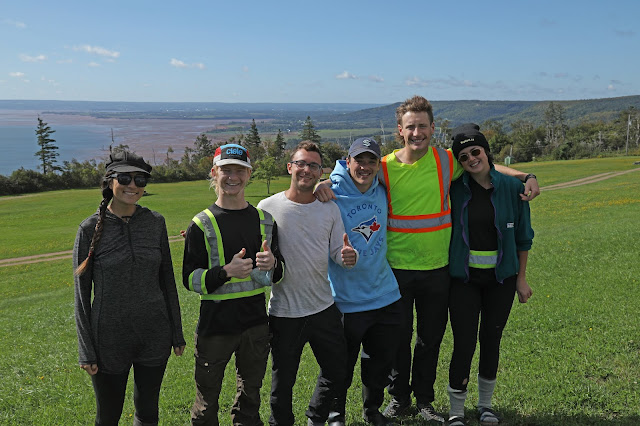
Our organization did some tree planting work at Herring Cove Provincial Park this past September.  This work was funded entirely by the Forests Canada organization through their Forest Recovery Canada initiative as the Project Sponsor.


This provincial park is located in the very southwest corner of New Brunswick, on Campobello Island (which is northeast of Grand Manan Island).  From the United States, Herring Cove is only a six minute drive from the border bridge at Lubec Narrows.  From our home base in Canada, the route is slightly more complicated, involving two ferry crossings in each direction, first to Deer Island and then on to Campobello Island.  Here's an overview graphic, courtesy of Google Earth:


The approximate GPS coordinates at the park visitor centre are:  44.87716, -66.93423


Most of the planting for this particular project involved planting tree seedlings where the Park staff wanted to improve visual buffers between camping sites (with existing sporadic mature trees).  We also planted a few trees in some open areas that should be returned to forest land, and in parts of the understory where the canopy could use eventual thickening and diversity.  The afforestation and the underplanting with both be important for carbon sequestration and climate change mitigation, and will provide additional habitat for birds and wildlife.  Basically, several goals aligned with the work that we carried out.  The following graphic shows the approximate locations for the new seedlings:


In total, our planting team added 13,443 trees to the Park this year!

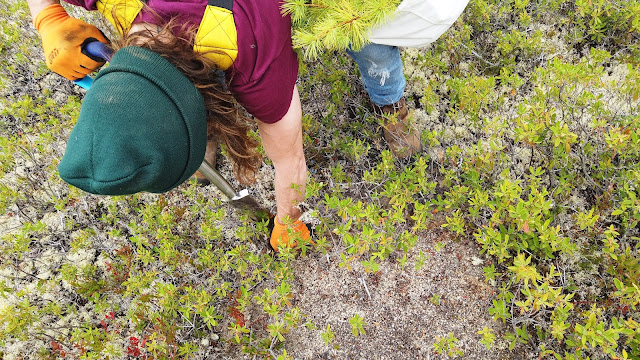
Here are a few photos of the planting team in action:


This project went very smoothly.  We were able to complete the planned planting on all of the current-year targeted areas within this park.  We expect to return at some point in the near future to add more seedlings to additional areas.  Naturally, we will also be making regular visits back to monitor the long-term growth and health of the planted trees.

We'd like to thank the staff at NB Parks for helping with the logistical planning that ensured this project came together, and we again want to thank the Forests Canada organization for being the sponsor that made this work possible.

You can see more photos of our tree planting work at this site by visiting our Planting Photos folder on Dropbox, then going into the "2024 Planting Photos" folder, then into the "Herring Cove Provincial Park" sub-folder.  Start here:

    www.replant-environmental.ca/photos


If you'd like to learn more about Herring Cove Provincial Park, visit their web page:

www.parcsnbparks.info/en/parks/6/herring-cove-provincial-park


Thanks for reading!

- Jonathan Clark


Replant.ca Environmental is a Canadian company that plants trees for carbon capture and builds community forests.  We also plant trees in national, provincial, and municipal public parks to mitigate damage from wildfires, storms, insects, and forest diseases.  We operate thanks to numerous small contributions from the general public, in addition to larger project sponsorships from businesses and corporations around the world.  If you'd like to learn how to show your support, visit our donations page.  Even if you aren't able to make a contribution, we very much appreciate when people are able to share our posts or our website link on social media, to help spread the word about the work that we're doing!


To learn more about the various species that we plant, visit the conifers page or the deciduous (hardwoods) page on our website.  Thanks so much for your interest!

Incidentally, our organization is often seeking additional land for our carbon capture projects.  Please visit this link if you might know of a recently-harvested property that we could rebuild into a permanent legacy forest.


Tree Planting Project, Mary Ann Fall Road (Cape Breton, Nova Scotia)

This past month (November 2024), Replant.ca Environmental finished up a small environmental restoration project in Cape Breton, near Ingonish.

This project took place on the east side of Cape Breton Island, just around the corner to the north of the Broad Cove Campground.  There used to be a rough gravel truck road that led up to the bridge by the Falls, but the Park has been using contractors to turn the area into a recreational trail for bikers and hikers.  The goal was to restore the old road to a more natural state, for the purpose of environmental restoration, and at the same time to provide additional public opportunities for outdoor recreation.  Our role in this project was to be a service provider, planting trees off to either side of the special compacted bike trail going up to the Fall.  Parks Canada was the organization that planned and sponsored this project.


Here's a graphic (courtesy of Google Earth) showing the location of the new bike trail, which is almost seven kilometers in length:


This trail falls within the confines of Cape Breton Highlands National Park.  We also did a separate larger project within the Park this year (on North Mountain), and another small project on the Skyline Trail.

Here are a few photos of the seedlings and of the team in action at Mary Ann Falls Road:


We planted a variety of species in the reclaimed sections beside the new bike trail:  Sugar maple, eastern white pine, eastern larch, white birch, black spruce, green alder, and balsam fir.


You can see more photos of our tree planting work at this site by visiting our Planting Photos folder on Dropbox, then going into the "2024 Planting Photos" folder, then into the "Mary Ann Falls" sub-folder.  Start here:

    www.replant-environmental.ca/photos


We'd like to thank Anne-Claude and her staff for their hospitality and support while we were on site, and to Parks Canada for putting together this proactive project.  It's a really enjoyable area to hike or bike!


Jonathan "Scooter" Clark


Replant.ca Environmental is a Canadian company that plants trees for carbon capture and builds community forests.  We also plant trees in national, provincial, and municipal public parks to mitigate damage from wildfires, storms, insects, and forest diseases.  We operate thanks to numerous small contributions from the general public, in addition to larger project sponsorships from businesses, corporations, and NGO's around the world.  If you'd like to learn how to show your support, visit our donations page.  Even if you aren't able to make a contribution, we very much appreciate when people are able to share our posts or our website link on social media, to help spread the word about the work that we're doing!

To learn more about the various species that we plant, visit the conifers page or the deciduous (hardwoods) page on our website.  Thanks so much for your interest! 


Monday, October 25, 2021

Tree Planting Project in Blomidon Provincial Park, Nova Scotia

Our organization did some more tree planting work in Blomidon Provincial Park this past September (2021).  This work was funded by the Trees For Life organization.  You can learn more about them from their website at:  www.treesforlife.ca


This provincial park is located slightly west of central Nova Scotia, in a very picturesque part of the province.  It overlooks the waters of the Minas Basin, which is part of the Bay of Fundy.  The park is located just north of Canning, and just 20km from the town of Wolfville (home to Acadia University).  It overlooks the highest tides in the world.  Here's an overview graphic showing the location of the park:


This project was initiated in 2020 to repair some of the extensive damage done by Hurricane Dorian in 2019.  Dorian hit central Nova Scotia on September 7th, 2019.  Eighty percent of the residents of the province lost power, and in the aftermath, Dorian turned out to be tied for being the strongest hurricane in recorded history to have ever hit Atlantic Canada.  The destruction was widespread.

Damage within Blomidon Park was extensive.  The park staff did an excellent job of cleaning up the mess, but the open spaces that resulted invited some further restoration work.  We discussed our desire to assist with this work, and the park staff were very happy to accommodate.

The park foresters estimated that approximately five acres (two hectares) of the core camping area within the park had been hit the hardest.  In addition, there was another five acre section in front of the camping area that had been cleaned out several years earlier (due to an insect problem) and that area could also use more trees.  Beyond that, there were some other isolated areas that would also benefit from reforestation work.  We decided that this project would be approached in multiple phases.  We would start by planting several thousand seedlings in the fall of 2020, and follow that up with a second larger phase in the fall of 2021.

The first phase of the project was completed successfully in the fall of 2020, thanks to public donations.  However, the project really began to have a major impact in 2021 thanks to the support from the Trees For Life organization.  The support that we received from them this year funded the planting of 8,487 more trees in 2021.  Amazing.


During the planning phase in 2020, we were given some maps outlining the approximate area that the foresters recommended we focus upon.  For context, here is one of those maps:


This photo shows two areas highlighted in red.  The section on the left is the older area that was damaged by insects.  Some trees had been planted in that area several years ago, but the coverage was sporadic and there was certainly room for more.  The section circled in red on the right side of that photo shows the main camping area, prior to the devastation by the hurricane.

To date, our teams have planted a total of eight species in the park.  We've planted five types of conifers so far:  Red spruce, white spruce, eastern larch, white pine, and a handful of black spruce.  We've also planted three species of deciduous hardwoods:  red oak, sugar maple, and yellow birch.  Some of these trees were planted in open ground where the previous mature trees had been completely destroyed and removed.  Other seedlings were planted in partial understory adjacent to camp sites, which again had suffered some wind damage.  These young understory trees will help to ensure the long-term health of the stand surrounding the camp sites.  Incidentally, we'll be adding additional hardwood species to the project in the future.

In addition to prioritizing the camping areas, we've also planted part of the area that was damaged by insects several years ago.  That area has started to regenerate partially.  Some of the trees in that area had been planted, and others are the result of natural regeneration.  The trees and brush in this area were quite patchy.  In some parts, the trees were looking quite healthy and were taller than we were.

Here's a graphic showing all of the areas that we've worked in to date:


Here are a few photos of the team in action in the park:


The second phase of planting on this project went very smoothly.  We're looking forward to returning next fall to wrap up the final phase of the restoration work.  The project is getting close to completion now, and the addition of several more hardwood species will finish this project in 2022.

We'd like to thank the staff at the Nova Scotia Department of Lands and Forestry for helping organize this project, and again to the Trees For Life organization for making this work possible.

You can see more photos of our 2021 tree planting work in our public 2021 Planting Photos folder on Dropbox.


If you'd like to learn more about Blomidon Provincial Park, visit their website:

parks.novascotia.ca/park/blomidon


Thanks for reading!

Jonathan Clark


Replant.ca Environmental is a Canadian company that plants trees for carbon capture and builds community forests.  We also plant trees in national, provincial, and municipal public parks to mitigate damage from wildfires, storms, insects, and forest diseases.  We operate thanks to numerous small contributions from the general public, in addition to larger project sponsorships from businesses and corporations around the world.  If you'd like to learn how to show your support, visit our donations page.  Even if you aren't able to make a contribution, we very much appreciate when people are able to share our posts or our website link on social media, to help spread the word about the work that we're doing!

To learn more about the various species that we plant, visit the conifers page or the deciduous (hardwoods) page on our website.  Thanks so much for your interest!

Incidentally, our organization is often seeking additional land for our carbon capture projects.  Please visit this link if you might know of a recently-harvested property that we could rebuild into a permanent legacy forest.


Sunday, October 17, 2021

Tree Planting Project in Terra Nova National Park (2021)

This summer (2021), Replant.ca Environmental was able to assist with some tree planting work in Terra Nova National Park.  Terra Nova is located on the east coast of Newfoundland, covering several of the inlets along Bonavista Bay.  If you're trying to drive there, it's just over an hour south of Gander International Airport, or slightly over two hours north of St. John's.  Think about the name.  Terra means "land" in Latin, and "Nova" means "new."  So basically, it's very close to being a Latin version of the name of the province.

Newfoundland officially became Canada's tenth province in 1949.  Up to that point, it was usually under colonial rule (with one twenty-six year period as a Dominion).  An interesting bit of trivia is that up until 1947, Newfoundland was still issuing its own coinage, obviously distinct from Canadian coins.  After Newfoundland joined Canada, it was only eight more years before Terra Nova was created, in 1957.  Terra Nova covers almost 400 square kilometers, so it's larger than most of Canada's provincial or municipal parks.

Newfoundland eventually became known as the province of Newfoundland & Labrador, after this name change was added to the Canadian constitution in 1981.

As noted by Wikipedia, Terra Nova protects the Eastern Island Boreal Forest natural region.  This region covers most of the island of Newfoundland (east of Deer Lake), and is characterized predominantly by black spruce trees, with pockets of balsam fir, white pine, mountain ash, tamarack, maple, and some other deciduous species.

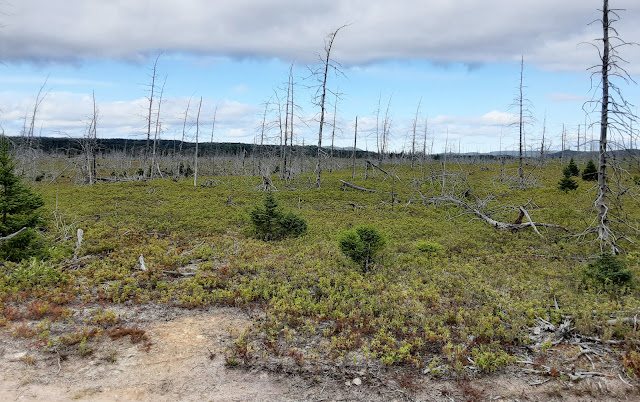
Most of Terra Nova consists of rolling hills covered with forests.  Visitors will also discover exposed rock faces, bogs, ponds, and wetlands.  Here's a photo showing part of the park which is in the process of regenerating.  You can see some juvenile spruce among older trunks of dead trees, and a ground layer covered with moss and Labrador tea vegetation:


Here's a graphic (courtesy of Google Earth) showing the location of the park:


Terra Nova has two campgrounds at Newman Sound and Malady Head.  In addition, there are also tons of back-country camping options, accessible by hiking, kayaking, or canoeing.  If you'd like some further information about reserving camping sites, start here:

www.pc.gc.ca/en/pn-np/nl/terranova/activ


Our Regional Director of [Newfoundland] Operations, John Moran, was able to send us a couple photos of the work done in TNNP in 2021:


This year (2021) was the first year that our organization did any work in this beautiful national park.  We hope and expect that we will be able to make further contributions in the future.  We're truly excited about this project, being one of our most unique and beautiful project sites to date!


You can see more photos of our 2021 tree planting work in our public 2021 Planting Photos folder on Dropbox.

We'd especially like to thank John Gosse (the Nature Legacy Ecologist) and his staff for their hospitality and support while we were on site.  We definitely look forward to returning in 2022 to continue any additional work that can be arranged.


Edit:  We were able to continue our work at Terra Nova in 2022.  If you'd like to learn more about that work, visit this link:

replant-environmental.blogspot.com/2023/02/tree-planting-at-terra-nova-national.html


Jonathan "Scooter" Clark


Replant.ca Environmental is a Canadian company that plants trees for carbon capture and builds community forests.  We also plant trees in national, provincial, and municipal public parks to mitigate damage from wildfires, storms, insects, and forest diseases.  We operate thanks to numerous small contributions from the general public, in addition to larger project sponsorships from businesses and corporations around the world.  If you'd like to learn how to show your support, visit our donations page.  Even if you aren't able to make a contribution, we very much appreciate when people are able to share our posts or our website link on social media, to help spread the word about the work that we're doing!

To learn more about the various species that we plant, visit the conifers page or the deciduous (hardwoods) page on our website.  Thanks so much for your interest!

Incidentally, our organization is often seeking additional land for our carbon capture projects.  Please visit this link if you might know of a recently-harvested property that we could rebuild into a permanent legacy forest.


Monday, January 18, 2021

Five Islands Provincial Park, Environmental Tree Planting Project

Our work at Five Islands Provincial Park has been a multi-year project.  This blog post was written as a review of our initial efforts in 2020.  We have an updated post about our 2021 work at this link.  However, if you're curious about the work that we did in 2020, please read on ...


Our organization did some tree planting work at the Five Islands Provincial Park this past September (2020).


This provincial park is located in north central Nova Scotia, on the north side of the Minas Basin.  This is on the south side of the arm that connects most of mainland Nova Scotia with New Brunswick.  The town of Truro is about an hour to the east.  Here's an overview graphic of eastern Canada, showing the location of this park:


This project was put together to initiate afforestation on some open areas, and to repair some of the extensive damage done by Hurricane Dorian in 2019.  This storm battered central Nova Scotia quite strongly, and was the costliest storm in history when it came to damages to the provincial power grid.

Damages within the park were not as bad as in some of Nova Scotia's other provincial parks.  However, since there were open areas in the park from previous insect damage, this park was a prime candidate for the planting of some new seedlings.  When we offered to assist with this work, the park staff were very happy to accommodate.

The park foresters estimated that a series of openings along the upper sides of Camping Area B would be amenable to the addition of seedlings.  We decided that this project would be approached in two phases.  We would plant several thousand trees in the fall of 2020, and follow that up with a second phase of planting in the fall of 2021 to complete the project.

Before our team arrived on site, we were given some maps outlining the approximate area that the foresters recommended we focus on.  For context, here is one of those maps:


The first day that we arrived on site was cool and somewhat overcast, with high humidity in the air.  We were given a tour of the area, and we spent some time with the local forester doing a final review of the areas which would be covered.  This project was completed over a three-day span.  The second day of planting was sunny with cloudy periods.  The final day was rainy.  While some people don't like to work in the rain, we always like to see our new seedlings getting watered right away.

The ground covered was generally a shallow slope, with a full cover of vegetation and a few existing juvenile conifers.  Here are two representative photos:


Our species mix for this project included a total of seven species.  We had three conifers (red spruce, eastern white pine, and eastern hemlock), and four species of deciduous hardwoods (sugar maple, red oak, mountain ash, and yellow birch).  We planted almost nine thousand trees in this park in 2020, and will double that number in 2021.

Here's a photo of Chris (the head forester at the park), examining some of our red oak stock:


Here's a photo of some of the sugar maple seedlings that we planted:


Here are a few more photos taken while working on this project, including the welcome sign at the front entrance, a photo of myself (Jonathan) getting ready to plant some trees, a tree with a large burl, and three photos taken down near the beach:


The first phase of planting on this project went very smoothly.  We're looking forward to returning during the fall of 2021 to finish the work!  A post about that work will be linked here in late 2021.

If you'd like to learn more about the Five Island Provincial Park, visit their web page:

parks.novascotia.ca/park/five-islands


Thanks for reading!

- Jonathan Clark


Replant.ca Environmental is a Canadian company that plants trees for carbon capture and builds community forests.  We also plant trees in national, provincial, and municipal public parks to mitigate damage from wildfires, storms, insects, and forest diseases.  We operate thanks to numerous small contributions from the general public, in addition to larger project sponsorships from businesses and corporations around the world.  If you'd like to learn how to show your support, visit our donations page.  Even if you aren't able to make a contribution, we very much appreciate when people are able to share our posts or our website link on social media, to help spread the word about the work that we're doing!

To learn more about the various species that we plant, visit the conifers page or the deciduous (hardwoods) page on our website.  Thanks so much for your interest!

Incidentally, our organization is often seeking additional land for our carbon capture projects.  Please visit this link if you might know of a recently-harvested property that we could rebuild into a permanent legacy forest.

Sunday, January 17, 2021

Blomidon Provincial Park, Environmental Tree Planting Project

Our work at Blomidon provincial park has been a multi-year project.  This blog post was written as a review of our efforts in 2020.  We have an updated blog post about our 2021 work at this link.  However, if you're curious about the work that we did in 2020, please read on ...


Our organization did some tree planting work in Blomidon Provincial Park this past September (2020).  Here's a photo taken from the front end of the park, overlooking the waters of the Minas Basin in the Bay of Fundy:


 This provincial park is located slightly west of central Nova Scotia, in a very picturesque part of the province.  The park is located just north of Canning, and just 20km from the town of Wolfville (home to Acadia University).  It overlooks the highest tides in the world.  Here's an overview graphic showing the location of the park:


This project was initiated to repair some of the extensive damage done by Hurricane Dorian in 2019.

Here's a photo, taken coming into the park:


Dorian hit central Nova Scotia on September 7th, 2019.  Eighty percent of the residents of the province lost power, and in the aftermath, Dorian turned out to be tied for being the strongest hurricane in recorded history to have ever hit Atlantic Canada.  The destruction was widespread.

Damage within Blomidon Park was extensive.  The park staff did an excellent job of cleaning up the mess, but the open spaces that resulted invited some further restoration work.  We discussed our desire to assist with this work, and the park staff were very happy to accommodate.

The park foresters estimated that approximately five acres (two hectares) of the core camping area within the park had been hit the hardest.  In addition, there was another five acre section in front of the camping area that had been cleaned out several years earlier (due to an insect problem) and that area could also use more trees.  Beyond that, there were some other isolated areas that would also benefit from reforestation work.  We decided that this project would be approached in two phases.  We would start by planting several thousand seedlings in the fall of 2020, and follow that up with a second phase of planting in the fall of 2021 to complete the project.

Before our team arrived on site, we were given some maps outlining the approximate area that the foresters recommended we focus upon.  For context, here is one of those maps:


This photo shows two areas highlighted in red.  The section on the left is the older area that was damaged by insects.  Some trees had been planted in that area several years ago, but the coverage was sporadic and there was certainly room for more.  The section circled in red on the right side of that photo shows the main camping area, prior to the devastation by the hurricane.

The day that we arrived on site was sunny yet humid.  We were given a tour of the area, and we spent some time doing a final review of the areas which should be targeted as the highest priority for our seedlings.

Our species mix on the first phase of this project was very basic.  We only brought in two types of trees, red spruce and white pine, in order to start planting a base layer throughout the main camping area within the park.  Some of these trees were planted in open ground where the previous mature trees had been completely destroyed and removed.  Other seedlings were planted in partial understory adjacent to camp sites, which again had suffered some wind damage.  Red spruce and eastern white pine are both fairly shade tolerant, and represented a very suitable choice for phase one.

Here's a photo showing our tree trailer.  We brought a full load of five thousand trees to get the project started:


We prioritized the camping area, as already noted, to ensure that our base layer of red spruce and eastern white pine could be completed in 2020.  Once those areas were finished, we still had some trees left over, so we were able to plant part of the area that was damaged by insects several years ago.  That area has started to regenerate partially.  Some of the trees in that area had been planted, and others are the result of natural regeneration.  The trees and brush in this area were quite patchy.  In some parts, the trees were looking quite healthy and were taller than we were.  In many other places, we only found consistent brush up to our waist.  You can see some of the area that I'm referring to in the background of this photo:


The first phase of planting on this project went very smoothly.  We're looking forward to returning in 2021 to finish the work.  We expect to bring several deciduous (hardwood) species when we return.

If you'd like to learn more about Blomidon Provincial Park, visit their website:

parks.novascotia.ca/park/blomidon


Thanks for reading!

Jonathan Clark


Replant.ca Environmental is a Canadian company that plants trees for carbon capture and builds community forests.  We also plant trees in national, provincial, and municipal public parks to mitigate damage from wildfires, storms, insects, and forest diseases.  We operate thanks to numerous small contributions from the general public, in addition to larger project sponsorships from businesses and corporations around the world.  If you'd like to learn how to show your support, visit our donations page.  Even if you aren't able to make a contribution, we very much appreciate when people are able to share our posts or our website link on social media, to help spread the word about the work that we're doing!

To learn more about the various species that we plant, visit the conifers page or the deciduous (hardwoods) page on our website.  Thanks so much for your interest!

Incidentally, our organization is often seeking additional land for our carbon capture projects.  Please visit this link if you might know of a recently-harvested property that we could rebuild into a permanent legacy forest.