Sunday, October 17, 2021

Tree Planting Project at Mactaquac Provincial Park (2021)

This fall, Replant.ca Environmental started a long-term planting project at Mactaquac Provincial Park.  This work was made possible thanks to a sponsorship from the Trees For Life organization.  Learn more about Trees For Life at www.treesforlife.ca

Mactaquac Provincial Park is only a 30 minute drive from Fredericton, over to the west through either Keswick or French Village.  The park is situated on the St. John River, across from the Mactaquac Dam and power generating station.  This station generates one eighth of the electricity for the entire province of New Brunswick.


Here's a graphic (courtesy of Google Earth) showing the location of the park:


Mactaquac has a golf course, campground, two beaches, hiking trails, and [in the winter] it also has cross-country skiing trails.  The camping options are excellent, with around four hundred camping sites and several rustic cabins.  The washrooms and showers were extremely clean, and the entire project was a wonderful experience.  Here's a link for anyone who wants to make reservations:

https://www.parcsnbparks.info/en/parks/10/mactaquac-provincial-park


In 2014, the first named hurricane of the season was Hurricane Arthur.  It was a very early hurricane, hitting North America in early July.  It swept up the east coast and over the Maritime provinces.  The winds did a tremendous amount of damage to trees and infrastructure, especially in the Fredericton area.  Mactaquac was hit quite hard, and lost a lot of trees.  Our goal was to start the slow process of replanting some of the areas that had blown down during that storm several years earlier, and also to begin creating new wooded areas in other sections of the park.

The Replant.ca Environmental team planted 48,564 young seedlings within the park in 2021.  A total of seven species were planted:  Red spruce, white spruce, eastern white pine, eastern larch, eastern white cedar, northern (red) oak, and sugar maple.  This was the first phase of a multi-year program, and both the species diversity and the number of hardwoods will be increased significantly in 2022 and 2023.  We plan to eventually provide more than sixteen different species (six conifers and ten deciduous) to the park.

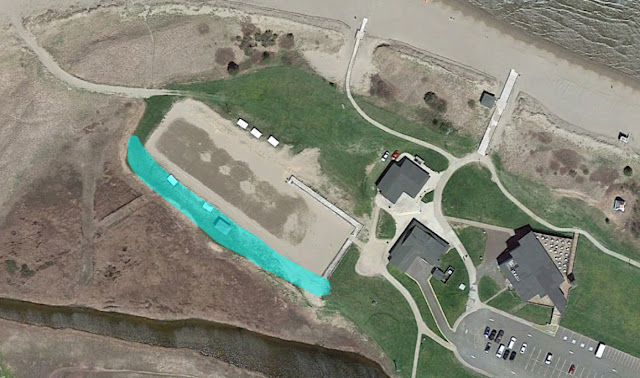
The team covered a number of different planting areas within the park.  The next three images show the approximate locations of newly planted seedlings (shaded in cyan).  Please note that these two photos are not perfectly oriented with north to the top, as is common in cartography.  However, they fit better in the blog post this way:


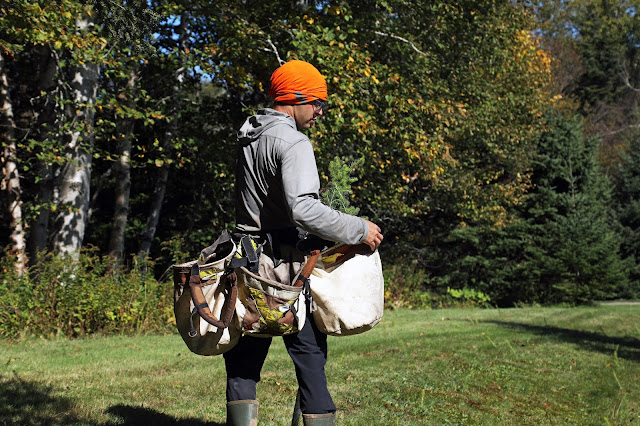
Here are a few photos of the team in action at Mactaquac:


You can see more photos of our 2021 tree planting work in our public 2021 Planting Photos folder on Dropbox.

We'd like to thank Kevin (the Park Manager) and his staff for their hospitality and support while we were on site.  We definitely look forward to returning in 2022 to continue the work that Trees For Life is making possible.


Edit:  If you'd like to read about the continuation of our work on this site in 2022, visit this link:

https://replant-environmental.blogspot.com/2023/02/tree-planting-project-at-mactaquac.html


Jonathan "Scooter" Clark


Replant.ca Environmental is a Canadian company that plants trees for carbon capture and builds community forests.  We also plant trees in national, provincial, and municipal public parks to mitigate damage from wildfires, storms, insects, and forest diseases.  We operate thanks to numerous small contributions from the general public, in addition to larger project sponsorships from businesses and corporations around the world.  If you'd like to learn how to show your support, visit our donations page.  Even if you aren't able to make a contribution, we very much appreciate when people are able to share our posts or our website link on social media, to help spread the word about the work that we're doing!

To learn more about the various species that we plant, visit the conifers page or the deciduous (hardwoods) page on our website.  Thanks so much for your interest! 

Incidentally, our organization is often seeking additional land for our carbon capture projects.  Please visit this link if you might know of a recently-harvested property that we could rebuild into a permanent legacy forest.


Tree Planting Project at Hopewell Rocks Provincial Park (2021)

This fall, Replant.ca Environmental started a long-term planting project at Hopewell Rocks Provincial Park.  This park is located in southeastern New Brunswick.  This work was made possible thanks to a sponsorship from the Trees For Life organization.  Learn more about Trees For Life at www.treesforlife.ca

Hopewell Rocks Provincial Park is only a 35 minute drive from Moncton, down to the south through Riverview.  The park is situated on the world-famous Bay of Fundy.  The park itself doesn't have camping sites, although there are private campgrounds open to the public only a few minutes away, such as Ponderosa Pines.  Incidentally, ponderosa pine is not a native species to New Brunswick.  Now I'm curious to know whether there are any imported ponderosa pines growing at the campground.  But let's get back to the topic of the day.  Here's a photo of Mattea, planting a sugar maple seedling:


Here's a graphic (courtesy of Google Earth) showing the location of the park:


Hopewell Rocks is famous due to its iconic beach rocks, which tell a story interwoven by time, tides, and the intricacies of nature.  Located on what is officially known as the Hopewell Rocks Ocean Tidal Exploration Site, these rocks (also known as the Flowerpot Rocks) are composed of sandstone and sedimentary conglomerate rock.  The rock formations were originally part of the shoreline, but over time, water eroded cracks in the cliffs and eventually caused some parts to appear to have become "separated" from the main cliffs.  As tides come in and out, the water gradually erodes the base of the rocks underneath the high tide line, causing the unique shape.  In 2016, part of the Elephant Rock sheared off, as was noted in this CBC article:

https://www.cbc.ca/news/canada/new-brunswick/hopewell-rocks-new-brunswick-collapse-1.3491431

That article has some good photos, including a photo at the bottom that illustrates the enormous difference in water level between low tide and high tide.  The Bay of Fundy has some of the world's largest tides.

If you'd like to learn more about the park, their website is a great resource:

www.parcsnbparks.info/en/parks/33/hopewell-rocks-provincial-park

The Replant.ca Environmental team planted 10,960 young seedlings within the park in 2021.  A total of four species were planted:  Red spruce, eastern white pine, northern (red) oak, and sugar maple.  This was the first phase of a multi-year program, and both the species diversity and the number of hardwoods will be increased significantly in the future.  We plan to eventually provide more than sixteen different species (six conifers and ten deciduous) to the park.

The team covered a number of different planting areas within the park.  Here are a few photos of the team in action at Hopewell Rocks:


You can see more photos of our 2021 tree planting work in our public 2021 Planting Photos folder on Dropbox.

We'd like to thank Erika (the Park Manager) and her staff for their hospitality and support while we were on site.  We definitely look forward to returning in 2022 to continue the work that Trees For Life is making possible.


Update:  Here's the post describing the work that we did at Hopewell Rocks in 2022!

replant-environmental.blogspot.com/2023/02/tree-planting-project-at-hopewell-rocks.html


Jonathan "Scooter" Clark


Replant.ca Environmental is a Canadian company that plants trees for carbon capture and builds community forests.  We also plant trees in national, provincial, and municipal public parks to mitigate damage from wildfires, storms, insects, and forest diseases.  We operate thanks to numerous small contributions from the general public, in addition to larger project sponsorships from businesses and corporations around the world.  If you'd like to learn how to show your support, visit our donations page.  Even if you aren't able to make a contribution, we very much appreciate when people are able to share our posts or our website link on social media, to help spread the word about the work that we're doing!

To learn more about the various species that we plant, visit the conifers page or the deciduous (hardwoods) page on our website.  Thanks so much for your interest!

Incidentally, our organization is often seeking additional land for our carbon capture projects.  Please visit this link if you might know of a recently-harvested property that we could rebuild into a permanent legacy forest.


Monday, October 11, 2021

Tree Planting Project at Parlee Beach Provincial Park, New Brunswick

This fall, Replant.ca Environmental started a long-term planting project at Parlee Beach Provincial Park.  This park is located in southeastern New Brunswick.  This work was made possible thanks to a sponsorship from the TreeEra organization.  Learn more about TreeEra at www.treeera.com

Parlee Beach Provincial Park is only a twenty minute drive from Moncton, just outside the town of Shediac.  If you've ever visited southeastern New Brunswick, you've probably visited Shediac, the home of the world's largest lobster (it's a statue).

The waters of the Northumberland Strait (which is part of the southern Gulf of St. Lawrence, between the mainland and PEI) are known for being some of the warmest Atlantic waters north of Virginia, and are very popular with tourists.  Parlee Beach is on this Strait (not too far from Murray Beach provincial park, which we also worked in).


Not surprisingly, Parlee Beach has a beautiful beach, and has been the host venue for a lot of big concerts over the past few decades, including Paul Simon, the Beach Boys, the Steve Millar Band, and Florida Georgia Line.  It also has almost 200 camp sites for visitors.  To make reservations, visit this link.

Here's a graphic (courtesy of Google Earth) showing the location of the park:


The September weather was beautiful when we were at the park.  But there was work to be done, so we couldn't let ourselves get distracted by the beach.  We prepared ourselves to start planting.

The Replant.ca Environmental team planted 2,500 young seedlings in the park in 2021.  A total of six species were planted.  Four of the species were conifers (white pine, red spruce, white spruce, and white cedar), and we also planted red oak and sugar maple.  This was the first phase of what we hope will be a multi-year program, and the number of hardwoods will be increased significantly in 2022 and 2023.

For 2021, we planted a large patch of open ground near the reception office, plus some fence line by the cabins where trees had recently been lost.  We also planted a number of trees by the volleyball courts, which will hopefully act as a wind break in the future and control some of the blowing sand.  Here are two overview graphics of the park that highlight the areas that received seedlings in the fall of 2021:


 Here are a few photos of some of the tree seedlings that we planted at Parlee Beach:


You can see more photos of our 2021 tree planting work in our public 2021 Planting Photos folder on Dropbox.

A group of Master students from the Environmental Sciences program at Université de Moncton were touring the park in the afternoon, and wanted talk to us briefly, to learn about our work.  That was a fun diversion!

We'd like to thank Michel (the Park Manager) and his staff for their hospitality and support while we were on site.  We definitely look forward to returning in 2022 to continue the work that TreeEra is making possible.


Jonathan "Scooter" Clark


Replant.ca Environmental is a Canadian company that plants trees for carbon capture and builds community forests.  We also plant trees in national, provincial, and municipal public parks to mitigate damage from wildfires, storms, insects, and forest diseases.  We operate thanks to numerous small contributions from the general public, in addition to larger project sponsorships from businesses and corporations around the world.  If you'd like to learn how to show your support, visit our donations page.  Even if you aren't able to make a contribution, we very much appreciate when people are able to share our posts or our website link on social media, to help spread the word about the work that we're doing!

To learn more about the various species that we plant, visit the conifers page or the deciduous (hardwoods) page on our website.  Thanks so much for your interest!

Incidentally, our organization is often seeking additional land for our carbon capture projects.  Please visit this link if you might know of a recently-harvested property that we could rebuild into a permanent legacy forest.


Sunday, October 10, 2021

Tree Planting Project at Murray Beach Provincial Park (2021)

This Fall (2021), Replant.ca Environmental started a long-term planting project at Murray Beach Provincial Park.  This park is located in southeastern New Brunswick.  This work was made possible thanks to a sponsorship from the Trees For Life organization.  Learn more about Trees For Life at www.treesforlife.ca

Murray Beach Provincial Park is only a 45 minute drive from Moncton, on a very scenic route along part of New Brunswick's Acadian coast.  New Brunswick has a 750km drive called the "Acadian Coastal Drive," and Murray Beach Provincial Park is on this trail (Route 955), near the southern end of the trail, in Murray Corner.  The park is near the Little Shemogue River (pronounced Shim-o-Gui), and overlooks the Northumberland Strait.

The waters of the Northumberland Strait (which is part of the southern Gulf of St. Lawrence, between the mainland and PEI) are known for being some of the warmest Atlantic waters north of Virginia, and are very popular with tourists.  You can see the Northumberland Strait in the background of this photo:


Not surprisingly, Murray Beach has a beautiful beach, and the park also has over one hundred camping sites, plus eight cabins.  To make reservations, visit this link.

Here's a graphic (courtesy of Google Earth) showing the location of the park:


The September weather was beautiful when we were at the park.  But there was work to be done, so we couldn't let ourselves get distracted by the beach.

Unfortunately, Murray Beach was hit by Hurricane Dorian in 2019.  Luckily, the damages were not as severe here as in many of the other parks in the region, but there was still a significant loss of mature trees.  Here's a graphic that zooms into part of the park, showing a before (left) and after (right) comparison.


The Replant.ca Environmental team planted 10,590 young seedlings in the park in 2021.  A total of ten species were planted.  Seven of the species were conifers (white pine, Jack pine, red spruce, white spruce, black spruce, eastern larch, and white cedar).  Three of the species were deciduous (red oak, yellow birch, and sugar maple).  This was the first phase of a multi-year program, and the number of hardwoods will be increased significantly in 2022 and 2023.  We plan to eventually provide more than seventeen different species (seven conifers and ten deciduous) to the park.

For 2021, we planted several patches of open ground, and we also planted a number of seedlings along the two thin lines that form either side of the Perimeter Trail corridor (this is a 6.0 kilometer walking trail within the park).  The three segments of the trail which have received seedlings so far account for about a quarter of the trail edges, so there is definitely more work to be done in 2022.  Here's an overview graphic of the park that highlights the areas that received seedlings in 2021:


Here are a few photos of the team in action at Murray Beach:


You can see more photos of our 2021 tree planting work in our public 2021 Planting Photos folder on Dropbox.

We'd like to thank Michel (the Park Manager) and his staff for their hospitality and support while we were on site.  We definitely look forward to returning in 2022 to continue the work that Trees For Life is making possible.


Edit:  For information about the follow-up phase to this planting, which took place at Murray Beach in 2022, visit this post:

replant-environmental.blogspot.com/2023/02/tree-planting-project-at-murray-beach.html


Jonathan "Scooter" Clark


Replant.ca Environmental is a Canadian company that plants trees for carbon capture and builds community forests.  We also plant trees in national, provincial, and municipal public parks to mitigate damage from wildfires, storms, insects, and forest diseases.  We operate thanks to numerous small contributions from the general public, in addition to larger project sponsorships from businesses and corporations around the world.  If you'd like to learn how to show your support, visit our donations page.  Even if you aren't able to make a contribution, we very much appreciate when people are able to share our posts or our website link on social media, to help spread the word about the work that we're doing!

To learn more about the various species that we plant, visit the conifers page or the deciduous (hardwoods) page on our website.  Thanks so much for your interest!

Incidentally, our organization is often seeking additional land for our carbon capture projects.  Please visit this link if you might know of a recently-harvested property that we could rebuild into a permanent legacy forest.


Monday, January 18, 2021

Victoria Park, Tree Planting Project in Nova Scotia (2020)

Our organization did quite a bit of tree planting work in Truro this past September (2020).  Truro is located in central Nova Scotia, and is often referred to as "the hub of Nova Scotia."  From Truro, highways branch out in all directions to other points within the province.  Truro is a small town which has an official population of only about twelve thousand people, but when you count everyone within a fifteen minute drive of the town, the number is probably closer to fifty thousand.  That may not sound like much to anyone who lives elsewhere in a dense urban area.  But Truro also has something else rather special.  It has a municipal park, called Victoria Park.  And that park is over three thousand acres in size!  The people of Truro are extremely lucky to have access to such a large and beautiful park, located right inside the town limits.

But exactly how big is three thousand acres?  Well, to put it into perspective, New York City's famed Central Park is less than a thousand acres.  And Central Park has its own police precinct (the 22nd) which polices the 58km of pedestrian trails found there.  Victoria Park also has an extensive trail network.

Here's an overview graphic of eastern Canada, showing the location of Victoria Park:


When we contacted Victoria Park to discuss the possibility of planting some trees there, we soon discovered that there were several areas which could definitely benefit.  There were a few sections where trees had been removed after being killed by insects.  Also, the former municipal landfill (now decommissioned) was relatively barren.  Although some parts of the topsoil cap over the landfill had already been replanted several years ago by the Scouts and other organizations, there was still a great deal of work to be done.

Here's a photo of the truck and trailer, loaded and ready to go for a day of planting:


After meeting with the park forester, and taking a tour, it appeared that there could be as much as fifty to sixty acres of open ground that was suitable for afforestation efforts.  The majority of that area was at the old landfill site, but there was still a significant amount of ground near the head of some of the main recreational trails.  We decided to initially target most of the recreational trailhead areas in 2020, taking account of the realization that this project would obviously require a multi-year approach spread out over two or perhaps even three years.

We spent several days working on-site.  For phase one, in September of 2020, we planted approximately fifteen thousand trees, which was sufficient to cover the majority of the trailhead area.  Here's an overview of that section of the park.  I've circled the areas that the Replant.ca Environmental organization has covered so far:


Those fifteen thousand trees reflected a fairly diverse mix, including four types of conifers (red spruce, white spruce, Jack pine, and a small number of eastern larch) plus six deciduous species (white birch, yellow birch, sugar maple, red maple, mountain ash, and red oak).  Our goal was to ensure that the planted sections grow up looking like a real forest, rather than just a straight pine or spruce monoculture.

We also planted a smaller number of trees in the landfill area, although those were mostly just conifers.  Here's a photo showing the location of those trees:


When we return to continue our work in the fall of 2021, our first priority will be to finish planting the remaining areas within the west side of the trailhead area.  After that, we'll start to tackle the larger landfill areas (and the open patch to the north of those areas) with a similar diverse mix of at least ten or twelve different species.  In addition to the species that we planted in 2020, we expect that we'll be able to add eastern white pine, eastern hemlock, and several additional new deciduous species.

Here's a photo of Dee, finishing up some survey work a day before we started planting the seedlings:


The first phase of planting on this project went very smoothly.  We typically get a number of curious passersby any time we're working in any sort of a park, but the pedestrian and cyclist traffic on this project was incredible.  We got to talk to dozens of people each day about the work that we were doing.  We're really looking forward to going back to this project in 2021.

If you'd like to learn more about Truro's Victoria Park, visit their website:

www.victoriaparktruro.ca

Victoria Park is the #1 rated attraction in Truro, and has over fifteen hundred very positive reviews on Google.


Update for 2021:  If you're looking for information about Phase 2 of this project, planted in 2021, visit this link:

replant-environmental.blogspot.com/2021/10/tree-planting-project-in-victoria-park.html


Thanks for reading!

- Jonathan Clark


Replant.ca Environmental is a Canadian company that plants trees for carbon capture and builds community forests.  We also plant trees in national, provincial, and municipal public parks to mitigate damage from wildfires, storms, insects, and forest diseases.  We operate thanks to numerous small contributions from the general public, in addition to larger project sponsorships from businesses and corporations around the world.  If you'd like to learn how to show your support, visit our donations page.  Even if you aren't able to make a contribution, we very much appreciate when people are able to share our posts or our website link on social media, to help spread the word about the work that we're doing!

To learn more about the various species that we plant, visit the conifers page or the deciduous (hardwoods) page on our website.  Thanks so much for your interest!

Incidentally, our organization is often seeking additional land for our carbon capture projects.  Please visit this link if you might know of a recently-harvested property that we could rebuild into a permanent legacy forest.

Five Islands Provincial Park, Environmental Tree Planting Project

Our work at Five Islands Provincial Park has been a multi-year project.  This blog post was written as a review of our initial efforts in 2020.  We have an updated post about our 2021 work at this link.  However, if you're curious about the work that we did in 2020, please read on ...


Our organization did some tree planting work at the Five Islands Provincial Park this past September (2020).


This provincial park is located in north central Nova Scotia, on the north side of the Minas Basin.  This is on the south side of the arm that connects most of mainland Nova Scotia with New Brunswick.  The town of Truro is about an hour to the east.  Here's an overview graphic of eastern Canada, showing the location of this park:


This project was put together to initiate afforestation on some open areas, and to repair some of the extensive damage done by Hurricane Dorian in 2019.  This storm battered central Nova Scotia quite strongly, and was the costliest storm in history when it came to damages to the provincial power grid.

Damages within the park were not as bad as in some of Nova Scotia's other provincial parks.  However, since there were open areas in the park from previous insect damage, this park was a prime candidate for the planting of some new seedlings.  When we offered to assist with this work, the park staff were very happy to accommodate.

The park foresters estimated that a series of openings along the upper sides of Camping Area B would be amenable to the addition of seedlings.  We decided that this project would be approached in two phases.  We would plant several thousand trees in the fall of 2020, and follow that up with a second phase of planting in the fall of 2021 to complete the project.

Before our team arrived on site, we were given some maps outlining the approximate area that the foresters recommended we focus on.  For context, here is one of those maps:


The first day that we arrived on site was cool and somewhat overcast, with high humidity in the air.  We were given a tour of the area, and we spent some time with the local forester doing a final review of the areas which would be covered.  This project was completed over a three-day span.  The second day of planting was sunny with cloudy periods.  The final day was rainy.  While some people don't like to work in the rain, we always like to see our new seedlings getting watered right away.

The ground covered was generally a shallow slope, with a full cover of vegetation and a few existing juvenile conifers.  Here are two representative photos:


Our species mix for this project included a total of seven species.  We had three conifers (red spruce, eastern white pine, and eastern hemlock), and four species of deciduous hardwoods (sugar maple, red oak, mountain ash, and yellow birch).  We planted almost nine thousand trees in this park in 2020, and will double that number in 2021.

Here's a photo of Chris (the head forester at the park), examining some of our red oak stock:


Here's a photo of some of the sugar maple seedlings that we planted:


Here are a few more photos taken while working on this project, including the welcome sign at the front entrance, a photo of myself (Jonathan) getting ready to plant some trees, a tree with a large burl, and three photos taken down near the beach:


The first phase of planting on this project went very smoothly.  We're looking forward to returning during the fall of 2021 to finish the work!  A post about that work will be linked here in late 2021.

If you'd like to learn more about the Five Island Provincial Park, visit their web page:

parks.novascotia.ca/park/five-islands


Thanks for reading!

- Jonathan Clark


Replant.ca Environmental is a Canadian company that plants trees for carbon capture and builds community forests.  We also plant trees in national, provincial, and municipal public parks to mitigate damage from wildfires, storms, insects, and forest diseases.  We operate thanks to numerous small contributions from the general public, in addition to larger project sponsorships from businesses and corporations around the world.  If you'd like to learn how to show your support, visit our donations page.  Even if you aren't able to make a contribution, we very much appreciate when people are able to share our posts or our website link on social media, to help spread the word about the work that we're doing!

To learn more about the various species that we plant, visit the conifers page or the deciduous (hardwoods) page on our website.  Thanks so much for your interest!

Incidentally, our organization is often seeking additional land for our carbon capture projects.  Please visit this link if you might know of a recently-harvested property that we could rebuild into a permanent legacy forest.